
Best Surfaces for Rolling Dough
The best surfaces for rolling out dough—no sticking, no mess. Learn what to roll dough on for cookies, pie crust, and bread dough with confidence.
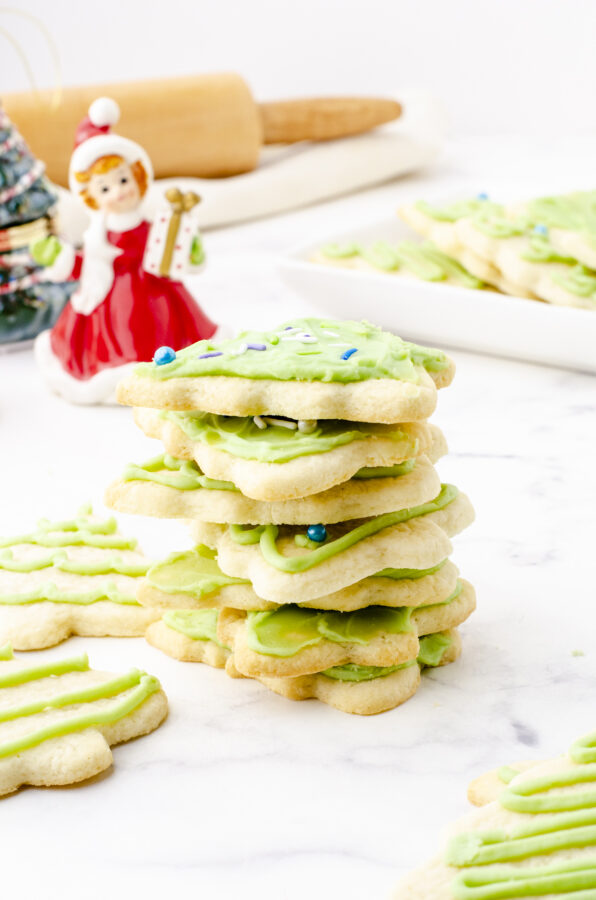
Rolling out dough shouldn’t feel frustrating—or leave your kitchen covered in flour. If you’ve ever struggled with sticky dough, uneven surfaces, or counters that just don’t work, you’re not alone.
The good news? The right surface makes all the difference.
Whether you’re rolling pie pastry, pizza crust, cinnamon buns, or rolled sugar cookies, choosing the best surface for rolling out dough can help prevent sticking, reduce mess, and make baking far more enjoyable.
Below, I’m sharing the most reliable dough-rolling surfaces—based on years of home baking, family wisdom, and what hundreds of bakers say actually works.
Disclosure: This post contains affiliate links for your shopping. convenience
Pastry Cloth and Rolling Pin Cover Set (What I use)
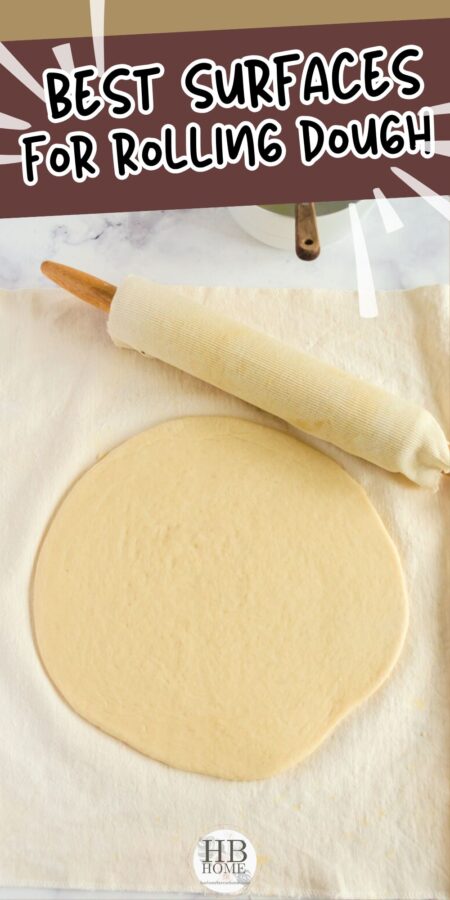
A pastry cloth and rolling pin cover is hands down my favorite rolling dough tool. I own 2 sets. One was my Grandma’s, and one was my Mom’s. Clearly, they are antiques now, and I just couldn’t live without them. The good news is, you can still buy pastry cloth sets on Amazon. (Here is a pastry cloth set similar to mine.)
What is a pastry cloth set? A pastry cloth is a thick, canvas-like cloth that is set on the counter or table top. Flour is worked into the cloth by sprinkling it on the top and rubbing it in with your hand. It provides a non stick surface for any type of dough. It comes with a rolling pin cover that is a soft flexible fabric that slips over a rolling pin (I have my Mom’s wooden rolling pin). The rolling pin cover, too, is prepped by rubbing flour into it, so dough doesn’t stick as you roll.
How do you wash/ store a pastry cloth set? A pastry cloth set is washable. However if there is no dough stuck on it, there is no need to wash it after every use. It can be shaken out, folded and stored in a ziplock bag the fridge or freezer (to prevent bacterial growth) between uses. I don’t wash mine until 3-4 uses.
For more helpful information on pastry cloth, here is a resource you might be interested in:
Video of using a pastry cloth
I compiled some clips I did for a sugar cookie class on my Instagram into a video. You can watch how I use a pastry cloth for rolling out sugar cookie dough here:
The same basic method would work for rolling out all types of dough – like pastry dough, pizza dough, and bread dough for cinnamon rolls.
More Rolling Dough Tools
In addition to the pastry cloth set that I use, there are also other options to help make your rolling dough step so much easier. Here are some you might want to consider.

Pastry Cloth and Rolling Pin Cover set with Guides
Although this pastry cloth set is similar to my antique sets (from my Mom and Grandma), this one has a lovely feature that mine doesn't have - guidelines! I think this would be super duper handy when rolling out pie crusts.
Silicone Baking Mat
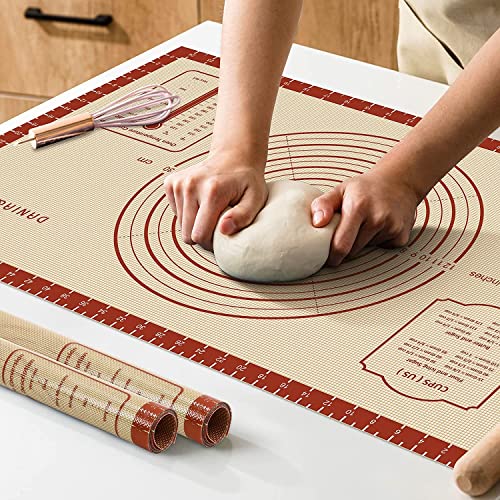
Next to the pastry cloth set, a silicone baking mat was definitely the next highest recommendation for rolling dough. People love the circle grids and ruler measurements. It can also be washed in soapy water, and one lady mentioned she even put it in the dishwasher!

Silicone Dough Rolling Bag
I had never heard of a pastry rolling bag like this until one of my Instagram followers told me about this. I think it looks like a genius idea! You place the dough between to two pieces and roll it out to the circle size you need.

Pastry Scraper & Bread Dough Cutter
A dough and pastry scraper tool like this can be handy for both scraping flours off counters and cutting dough up. I used a scraper similar to this when I cooked in a commercial kitchen. It is wonderful for "scooping up" chopped veggies, etc. to transfer from a cutting board to a bowl as well.
Disposible Counter Cover
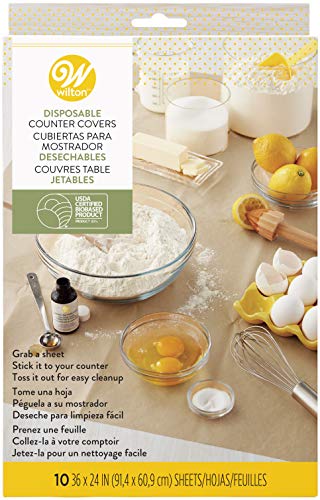
If you are concerned with not rolling dough directly on your counters, these disposable counter covers might be just what you are looking for. Or, if your counters are too small to roll on, you could use this on your table top.
Parchment Paper
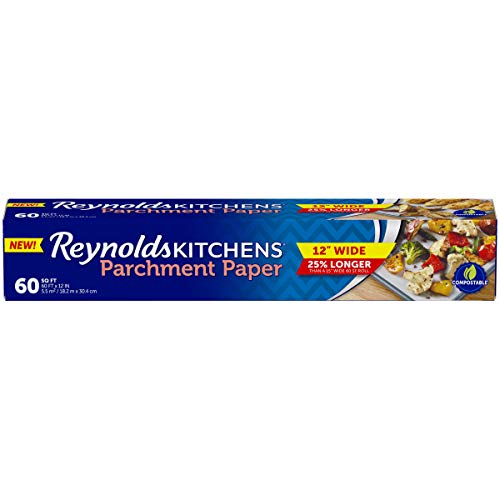
I have experimented with rolling dough between 2 sheets of parchment paper. It does, in fact, work. However, the parchment paper will want to slide all over your counter! I heard of one lady taping hers down with large packing tape first. I found that wiping the counter with a damp cloth first made the parchment paper "stick" to the counter and prevented it from sliding.
If you choose to use the parchment paper method, I found that dusting it lightly with flour before putting the dough on it worked best.
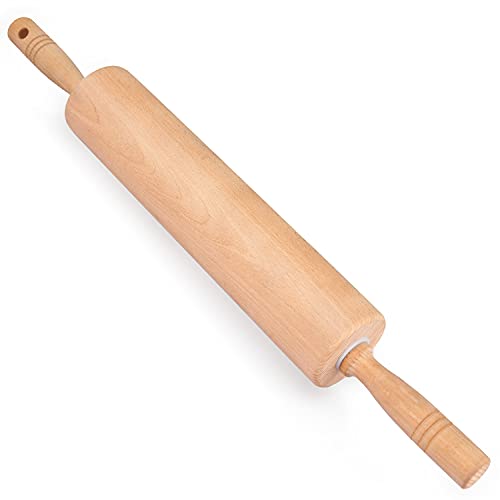
Classic Rolling Pin
If you are looking for tools for rolling dough, you will definitely need a rolling pin. I, personally, love a classic wooden rolling pin. It pairs perfectly with my rolling pin cover from my pastry cloth set, and I love that it is lightweight.
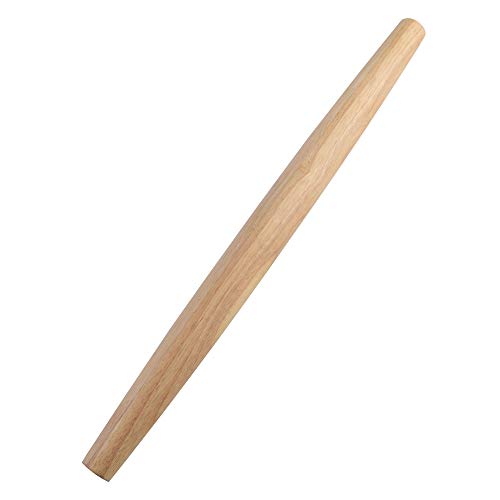
French Rolling Pin
Although I have never used one personally, I'm fascinated with the french style rolling pin. I've watched various food experts on tv use them, and would love to try one out someday!
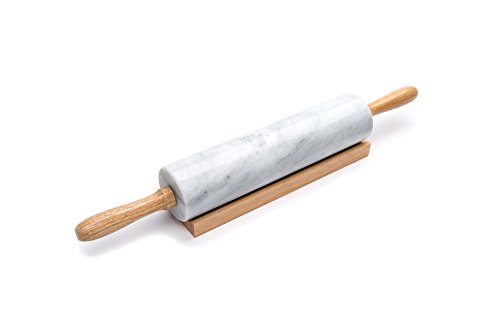
Marble Rolling Pin
My mother-in-law's rolling pin choice was a marble rolling pin. Marble rolling pins are very heavy and the big draw to using them is that the rolling pin does the hard work so you don't have to work so hard! The smooth and cold marble surface works well as a non-stick surface for dough.
The drawback to these is that since they are so heavy, if you accidentally drop it, the handle might break. (Ask me how I know.;)
General Tips for Rolling Dough Smoothly
No matter what type of surface you choose to roll dough on, you will first need to sprinkle it lightly with flour before placing the dough on it.
Throughout the rolling process you may need to sprinkle on more flour under and on top of the dough, ensuring it doesn’t start to stick to either the surface you’re rolling on or the rolling pin.
You can refer to the video above to watch how I roll out sugar cookie dough. (Sidenote, I roll my sugar cookie dough with flour, but some people prefer to use powdered sugar since it is a sweet dough.)
Other dough rolling tools, tips, & tricks
Do you have a favorite dough rolling tool that I haven’t mentioned? If so, please list it in the comments below. We all love to learn new tried and true kitchen tips and tricks!

I need help with rolling gluten free dough! I’ve tried a couple of times but it’s too sticky or crumbly so now I’m a chicken!
Oh Carla, I’ve never tried rolling gluten free dough, so I don’t have any tips for that! Maybe someone else reading the comments can chime in with great solutions for rolling out gluten free dough??
Silicone baking mat!
Hi Beverly, I’ve heard so many people love silicone baking mats for rolling dough. They sound like a great solution.
I roll my dough on a silicone pastry mat. Also, to keep my cookies consistent, I place a stack of index cards in ziplock bags, under each side of my rolling pin. I know, I can buy a rolling pin that would measure for me, I like to use what I have 🙂.
Well, Janet, your rolling dough hack of placing stacked index cards in ziplock bags under each side of the rolling pin is genius! What a great way to measure the perfect thickness for dough rolling. Thank you for sharing that tip with us.
I haven’t rolled dough in years, but I always used a piece of wax paper sprinkled with flour and a wooden rolling pin, which I rubbed flour over before starting. Sometimes had to add flour on the wax paper and/or the rolling pin during the process. The rolling cloth and pin cover were a revelation to me. If I roll dough again, I think I’ll try those.
If I am making a pie crust that requires lifting & moving, I sprinkle a little water on the counter then a piece of waxed paper. If I am making smaller things like cookies, I just roll directly on the counter.
Hi Chris, Sprinkling water on the counter to hold the waxed paper in place before rolling dough on it is a brilliant idea. Thanks for sharing that dough rolling tip with us!